App preview
Inside Trade Master 9.
Four order execution modes are available to meet various trading objectives: Instant, Request, Market and Exchange execution.
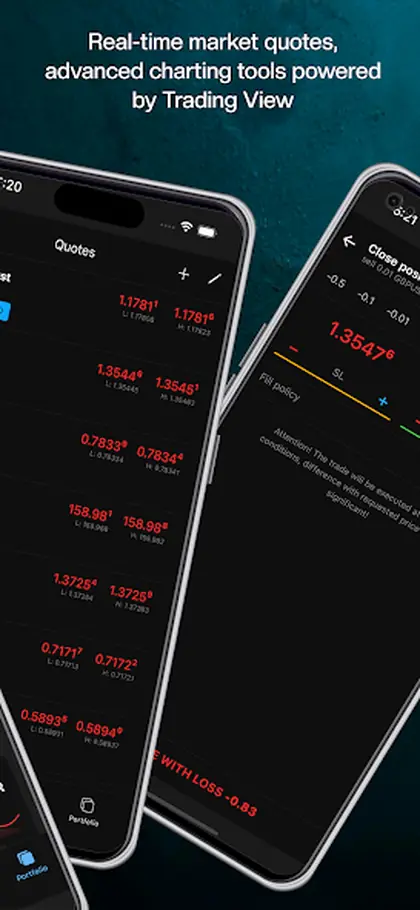
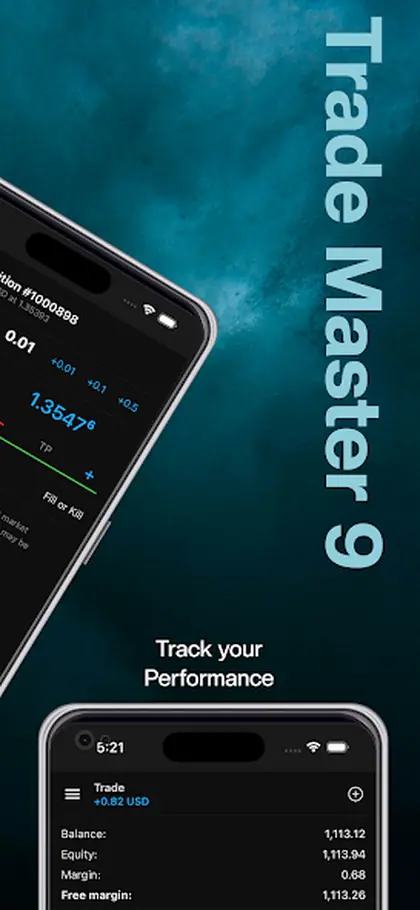
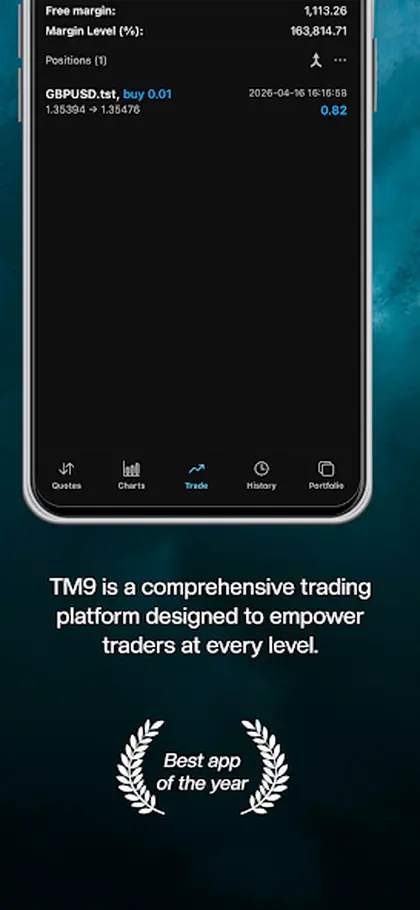
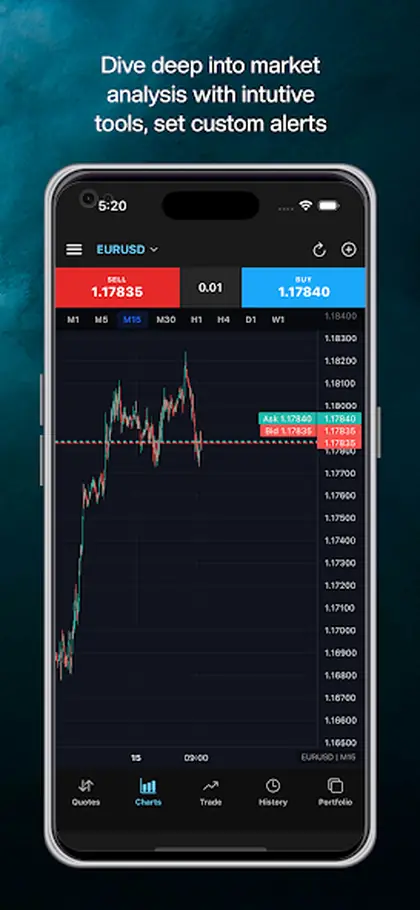
How an order reaches the market matters as much as the order itself when a trading mobile app is carrying your forex and exchange operations.
Four order execution modes are available to meet various trading objectives: Instant, Request, Market and Exchange execution.
Two traders can send the same order at the same moment and get different outcomes, and the reason is usually execution mode. In a trading mobile app handling operations in the Forex and exchange markets, the mode defines the deal between you and the market: what is guaranteed, what is negotiable, and what happens when the price you saw is gone by the time your order arrives.
Trade Master 9 offers four. Instant execution trades at the quoted price, which prioritises price certainty — if that price is no longer available you may be requoted rather than filled at something worse. Request execution asks for a quote which you then confirm, putting a deliberate pause between decision and trade. Market execution takes the price available at the moment of arrival, prioritising the fill over the exact level. Exchange execution routes through the venue itself, following its rules.
None of the four is better in the abstract. A scalper working a fast pair usually wants the fill and accepts the variation. A trader placing a large order around a news release may want the price confirmed before committing. What matters is knowing which mode applies to the instruments you trade, because it explains most of the surprises people attribute to the platform.
Execution mode is set per instrument by your broker rather than chosen in the terminal, so it belongs on the list of questions you ask when opening an account, alongside spreads and funding. It works together with the rest of the trading system — Market Depth, the separate accounting of orders and trades, and support for both netting and hedging — covered on the other pages in this section. The home page has the complete overview of the app.
Four order execution modes are available to meet various trading objectives: Instant, Request, Market and Exchange execution.
Four execution modes — Instant, Request, Market and Exchange — for different trading objectives.
The modes exist because different trading objectives need different guarantees — price certainty in one case, fill certainty in another.
Execution modes work alongside Market Depth, the separate accounting of orders and trades, and support for both netting and hedging.
Three short notes on how this works day to day.
In fast markets the mode decides what happens when your price is gone: instant execution may reject or requote, market execution fills at what is available. Neither is better in the abstract; they suit different strategies.
Execution mode is set per instrument by your broker rather than chosen in the app, so it is worth asking which mode applies to the instruments you trade most before judging a fill.
This page is for traders investigating fills and requotes, and for brokers explaining to clients why the same order behaves differently on different symbols.
How trading system sits inside the Trade Master 9 platform.
The platform delivers Market Depth and separate accounting of orders and trades, supporting both the traditional netting system and the hedging option system. Four execution modes — Instant, Request, Market and Exchange — cover different trading objectives, and every order type is available: 2 market order types, 6 pending order types, 2 stop orders and trailing stop.
TM9 is a software development company and does not provide investment or brokerage services. The platform supplies the trading terminals, analysis tools and automation; your broker holds the funds, sets spreads and leverage, and executes the orders the platform sends. Trading carries a real risk of loss, and signals or robots are tools rather than financial advice.
Flexible Trading System. Netting and Hedging. Market Depth. Or open the Platform Guide for all 20 pages.