App preview
Inside TM9 2.0.
Live quotes, charts, portfolio and analysis tools on the phone.
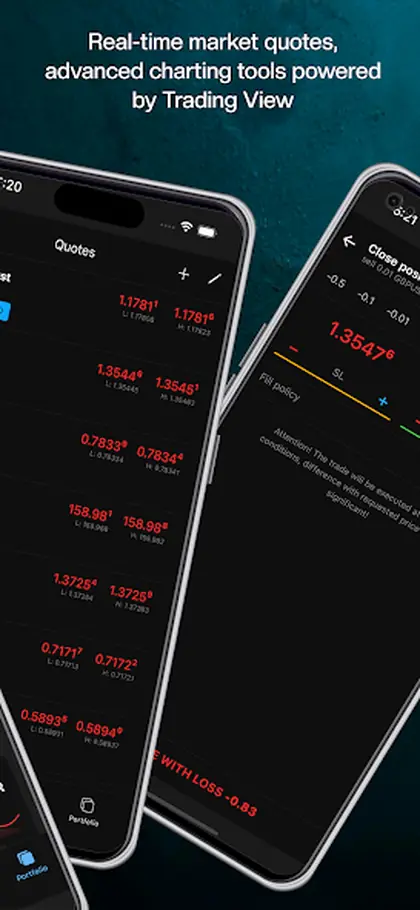
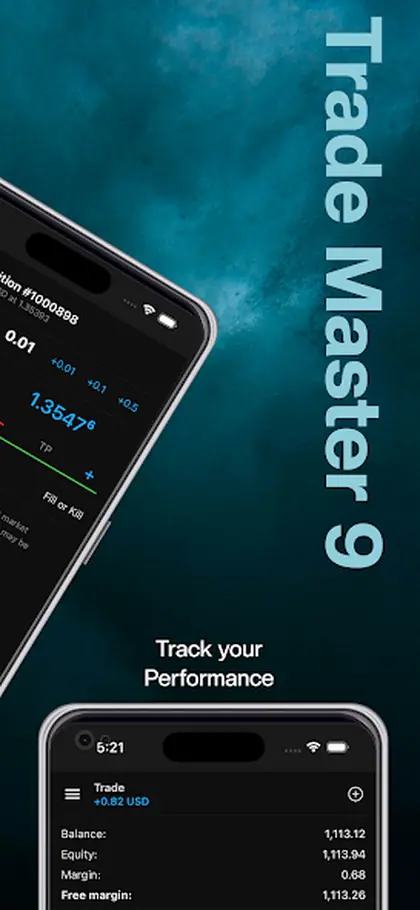
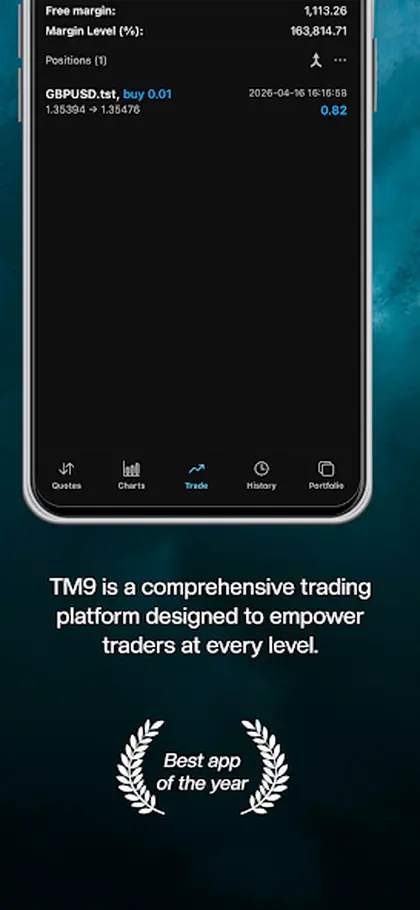
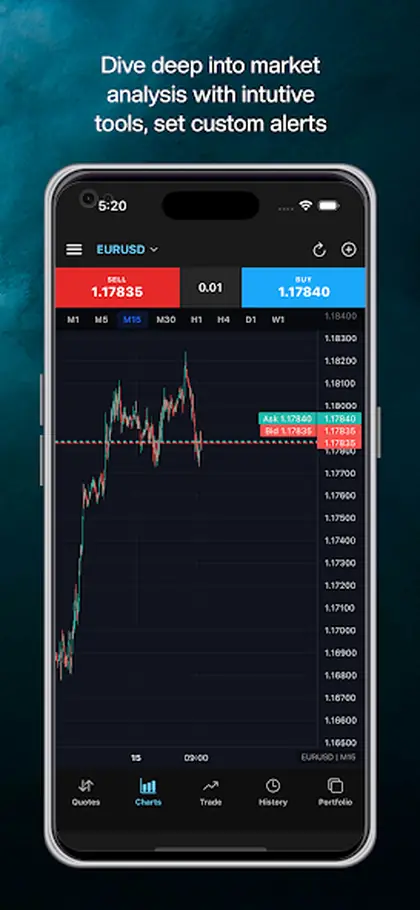
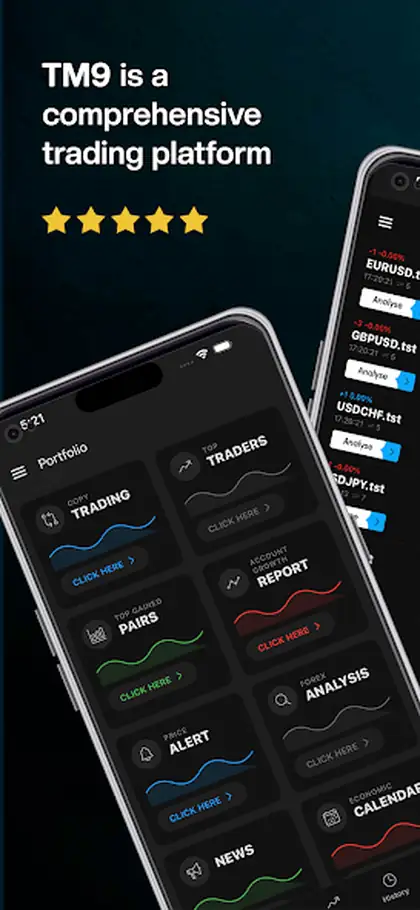
TM9 is a next-generation trading mobile app for operations in the Forex and exchange markets — this page walks through the process it supports.
Choosing a broker and a platform, selecting a pair, analysing the market, sizing the position, placing the order, setting stops, managing the trade and reviewing it afterwards.
Learning how to trade Forex is more than learning where to click Buy or Sell. A complete trading process includes market selection, analysis, position sizing, order management, risk control and post-trade review.
This guide explains a structured Forex trading workflow for beginners and intermediate traders. It is educational information and does not guarantee trading results.
Forex trading involves buying one currency while selling another. Forex instruments are normally represented as currency pairs such as EUR/USD, GBP/USD or USD/JPY.
When trading a currency pair, the trader takes a position based on an expectation about the relative movement between the two currencies.
Example: With EUR/USD, EUR is the base currency and USD is the quote currency. A long EUR/USD position generally reflects an expectation that EUR will appreciate relative to USD. A short EUR/USD position generally reflects the opposite expectation.
Actual trading outcomes depend on market movements, position size, execution, spreads, commissions, financing costs and other factors.
A structured Forex trading workflow can be divided into the following stages:
Understand currency pairs, pips, spreads, leverage, margin, lot size and basic order types before attempting to trade.
Research the broker that will provide your trading account. Review applicable regulation, available instruments, trading costs, execution conditions and account terms.
Use trading software that provides the charts, market information, order management and device access you need.
Choose an instrument based on your trading plan and study its liquidity, volatility, spread and market conditions.
Use technical, fundamental or combined analysis to understand the market environment before entering a trade.
Determine the intended entry, invalidation level, potential exit and position size before placing the order.
Determine how much capital could be lost if the trade moves against your plan.
Select the appropriate order type and submit the trade through the broker-connected platform.
Monitor the position according to your predefined rules rather than reacting emotionally to every price movement.
Record the result and review whether the trade followed your planned process.
Before placing a Forex trade, understand the terminology used by trading platforms and brokers.
Represents the relative value of one currency against another.
A commonly used unit for describing changes in Forex exchange rates.
The difference between the bid and ask prices.
Allows a trader to control a larger position relative to allocated capital and increases potential exposure.
Capital required according to the broker's requirements for opening or maintaining a leveraged position.
Represents the quantity or contract size of a Forex position.
The broker is an important part of the Forex trading process. Traders should investigate the broker independently before opening or funding an account.
Important: Do not select a broker solely because of advertising, bonuses or claims about potential returns. Verify the broker's regulatory information and conditions independently.
The trading platform is the software interface used to view market information, analyse prices, place orders and manage positions.
TM9 provides trading access across mobile, web and desktop environments. Its current platform information describes charts, market analysis, trading tools, account management and broker-connected order functionality.
Explore: Forex Trading Platform .
After selecting the broker and platform, choose the currency pair that fits your trading plan.
| Pair Category | General Description | Examples |
|---|---|---|
| Major Pairs | Major currencies paired with the US dollar are commonly classified as major Forex pairs. | EUR/USD, GBP/USD, USD/JPY |
| Minor Pairs | Currency combinations that generally do not include USD. | EUR/GBP, EUR/JPY, GBP/JPY |
| Exotic Pairs | Combinations involving a major currency and another less frequently traded currency. | USD/TRY, USD/ZAR, EUR/TRY |
Spreads, liquidity and trading conditions vary between instruments and brokers.
Before entering a trade, determine what type of market environment you are dealing with.
TM9's current web-platform documentation describes using price charts, technical indicators and fundamental information together to study market conditions.
A trading method designed for a strong trend may behave differently when the market is moving sideways. Understanding market conditions can therefore be an important part of a trading plan.
Technical analysis examines historical and current price information to identify patterns, trends, momentum and other market characteristics.
No technical indicator can guarantee the direction of future prices. Indicators should be treated as analytical tools rather than predictions.
Explore: Forex Technical Analysis and Forex Charting .
Fundamental analysis considers economic and financial information that may affect currency markets.
Economic events can produce significant market volatility, and actual market reactions can differ from expectations.
See: Fundamental Analysis .
Before entering a position, write down the conditions that make the trade valid.
Defining these factors before the trade can reduce impulsive decisions during market volatility.
Position sizing determines how large the trade will be.
Position size should be considered together with account size, stop-loss distance, pip value and the amount of capital you are prepared to risk.
Concept: A wider stop-loss generally requires a smaller position if the trader wants to keep the potential monetary loss within the same predefined risk limit.
Position sizing is one of the most important links between a trading strategy and actual account risk.
Learn more: Forex Position Sizing .
Different trading situations can require different order types.
| Order Type | General Purpose |
|---|---|
| Market Order | Used to request an immediate trade at the available market price, subject to execution conditions. |
| Limit Order | Used to request execution at a specified price or better according to applicable conditions. |
| Stop Order | Becomes active when a specified market condition or price level is reached. |
| Stop-Loss | Used as part of a predefined risk-management plan to limit potential losses. |
| Take-Profit | Used to request position closure when a specified profit condition is reached. |
Order availability and execution behaviour depend on the trading platform, broker and instrument.
Stop-loss and take-profit levels should normally be determined as part of the trade plan rather than added impulsively after a position has moved.
A stop-loss can be used to define the point at which a trading idea is considered invalid according to the trader's plan.
A take-profit can be used to define a planned exit when a specified market condition is reached.
Execution warning: Stop-loss and take-profit orders do not eliminate market risk. During fast markets, gaps, low liquidity or other execution conditions, the actual execution price may differ from the requested level.
After completing the analysis and risk calculations, review the order before submitting it.
TM9's current web documentation describes browser-based order placement, position management and account review, with the same account accessible through supported mobile and desktop environments.
Once a trade is open, monitoring should follow the original trading plan.
Avoid changing the position simply because of short-term emotional reactions to normal market fluctuations.
A position can be closed according to the trading plan, when the planned target is reached, when the setup becomes invalid, or when other predefined conditions require an exit.
Traders should understand whether they are closing the entire position or only part of it where partial closing is supported.
TM9's web trading documentation describes managing open positions, including modifying and closing positions, subject to the applicable account functionality.
Trade review is an important part of developing a consistent trading process.
A losing trade can still be a properly executed trade, while a profitable trade can still violate the trading plan. Review the process separately from the financial outcome.
A Forex strategy defines how a trader identifies opportunities, enters trades, manages risk and exits positions.
Attempts to participate in established directional market movements.
Looks for price movement beyond a defined support, resistance or consolidation area.
Focuses on markets that remain within a relatively defined price range.
Uses price behaviour and chart structure as a primary analytical input.
Uses economic and financial information to form a market view.
Uses predefined software rules or trading robots to analyse markets and execute trades where supported.
No strategy works in every market condition. Traders should test and understand a strategy before using it with real capital.
| Area | Manual Trading | Automated Trading |
|---|---|---|
| Decision Process | Trader evaluates conditions and makes decisions. | Software follows predefined rules. |
| Execution | Orders are manually submitted or managed. | Orders can be generated automatically when programmed conditions occur. |
| Monitoring | Trader monitors the market. | Automation can monitor according to its programmed logic. |
| Risk | Human decisions can introduce behavioural errors. | Software can execute rules consistently but can also behave incorrectly if the strategy or settings are unsuitable. |
Automation does not eliminate financial risk and should be tested carefully before being connected to a live trading account.
Modern trading workflows can involve more than one device.
| Environment | Common Use |
|---|---|
| Mobile | Monitoring markets, receiving alerts, reviewing positions and managing supported trades while away from the desk. |
| Web | Browser-based market analysis, order management and account access without installing desktop software. |
| Desktop | Larger charting workspace, detailed analysis and supported automated trading workflows. |
TM9 currently documents mobile, web and desktop environments, with the Web Terminal designed to provide functionality comparable to its desktop environment.
Explore: Mobile Forex Trading and Online Forex Trading .
Beginners can use a demo environment where available to become familiar with the trading platform before committing real capital.
TM9's current getting-started documentation specifically describes demo practice as a way to explore the platform in a simulated environment before using real funds.
Risk management should be part of the trading process before an order is placed.
Match trade size to the account and predefined risk limit.
Define an invalidation or maximum-loss condition as part of the trading plan.
Understand how leverage affects market exposure and potential losses.
Monitor available margin and broker margin requirements.
Consider total exposure across multiple positions rather than analysing each trade in isolation.
Consider predefined daily, weekly or strategy-specific loss limits.
Learn more: Forex Risk Management .
TM9 can serve as the software environment between the trader and a supported broker.
| Trading Stage | Possible TM9 Function |
|---|---|
| Market Preparation | Quotes, watchlists, charts and market information. |
| Technical Analysis | Charts, timeframes, indicators and analytical tools. |
| Market Monitoring | Alerts and real-time market information where supported. |
| Order Placement | Broker-connected order functionality. |
| Position Management | Open positions, order management and account monitoring. |
| Trade Review | Trading history and account information. |
TM9's current platform information describes the software as a multi-asset trading platform that connects to supported brokers; funds remain with the broker rather than TM9.
No. TM9 is trading software and a platform provider rather than a Forex broker.
A trader needs a broker account for applicable trading services. The broker provides the account, holds client funds and determines the applicable trading conditions.
TM9's current website explicitly distinguishes the platform from the broker and states that users connect a supported broker account to TM9.
A typical Forex trading process involves selecting a currency pair, analysing market conditions, defining the trade, calculating position size and risk, placing an order through a broker-connected platform, managing the position and reviewing the result.
Beginners should first learn Forex fundamentals, research a suitable broker, learn the trading platform, practise with a demo account where available and develop risk-management rules before considering live trading.
There is no single currency pair that is suitable for every beginner. Compare spreads, liquidity, volatility, trading hours and broker conditions before selecting an instrument.
A Forex trading strategy is a predefined approach for analysing markets, identifying trading conditions, entering positions, managing risk and exiting trades.
A demo account can help you practise platform functions, analyse charts and learn order management in a simulated environment before using real funds.
Forex trading involves financial risk and there is no guarantee of profit. Results can be affected by market movements, transaction costs, leverage, execution and trading decisions.
Yes. Supported mobile trading applications can provide market information, charts, alerts and trading functionality through smartphones.
Yes. A browser-based trading platform can provide access to charts, analysis, orders and account management without installing desktop software where supported.
No. TM9 is trading software and a platform provider. Traders connect the platform to a supported broker account.
Build your knowledge first, understand your broker and trading platform, practise the trading workflow, and define your risk controls before considering live Forex trading.
Forex and other financial-market trading involve substantial financial risk and may result in the loss of capital. You should never trade money that you cannot afford to lose.
Leverage can increase both potential gains and potential losses. Market conditions can change rapidly, and execution prices may differ from requested levels during volatile or illiquid conditions.
Technical analysis, fundamental analysis, indicators, trading signals, copy trading, automated strategies and trading robots do not guarantee profits.
TM9 is trading software and a platform provider, not a broker. Broker-specific spreads, commissions, leverage, execution, instruments, account requirements and other trading conditions are determined by the applicable broker.
Live quotes, charts, portfolio and analysis tools on the phone.
Each step in the process, with the guide that covers it in detail.
Check regulation, spreads, funding and withdrawal terms first.
Choose PlatformThe software you analyse and place orders through.
Select Currency PairMajors, minors and what your broker actually offers.
Analyse MarketCharts, indicators and the conditions you are trading into.
Define SetupEntry, invalidation and target, decided before you act.
Position SizeHow much to risk, and what that means in lots.
Place OrderMarket, pending and stop orders, and when each fits.
Stop-Loss / Take-ProfitProtect the trade and bank the win without watching it.
Manage PositionMonitoring, adjusting and trailing an open trade.
Review TradeRead your own history and learn from what happened.
Nine pages covering the market, the app, the platform and the software behind it.
forex-trading.html
Forex Trading Appforex-trading-app.html
Best Forex Trading Appbest-forex-trading-app.html
Forex Trading Platformforex-trading-platform.html
Forex Trading Softwareforex-trading-software.html
Online Forex Tradingonline-forex-trading.html
Mobile Forex Tradingmobile-forex-trading.html
Forex Trading for Beginnersforex-trading-for-beginners.html
Forex Marketforex-market.html
Browse everything in the TM9 Guides and Platform Guide hubs, or start at the home page.
identify-trading-opportunities.html
Trade Forex, Stocks & Futures with TM9index.html
Indices Tradingindices-trading.html
Or jump to the TM9 Guides and Platform Guide hubs, or the home page.